A day off from capturing images for my assignment and so I decided to experiment with my recently acquired L-bracket and Levelling head by taking some panoramic shots. Not a creative act in itself, but in the spirit of pushing my photography further, I thought it would be a skill that I could use in the future.
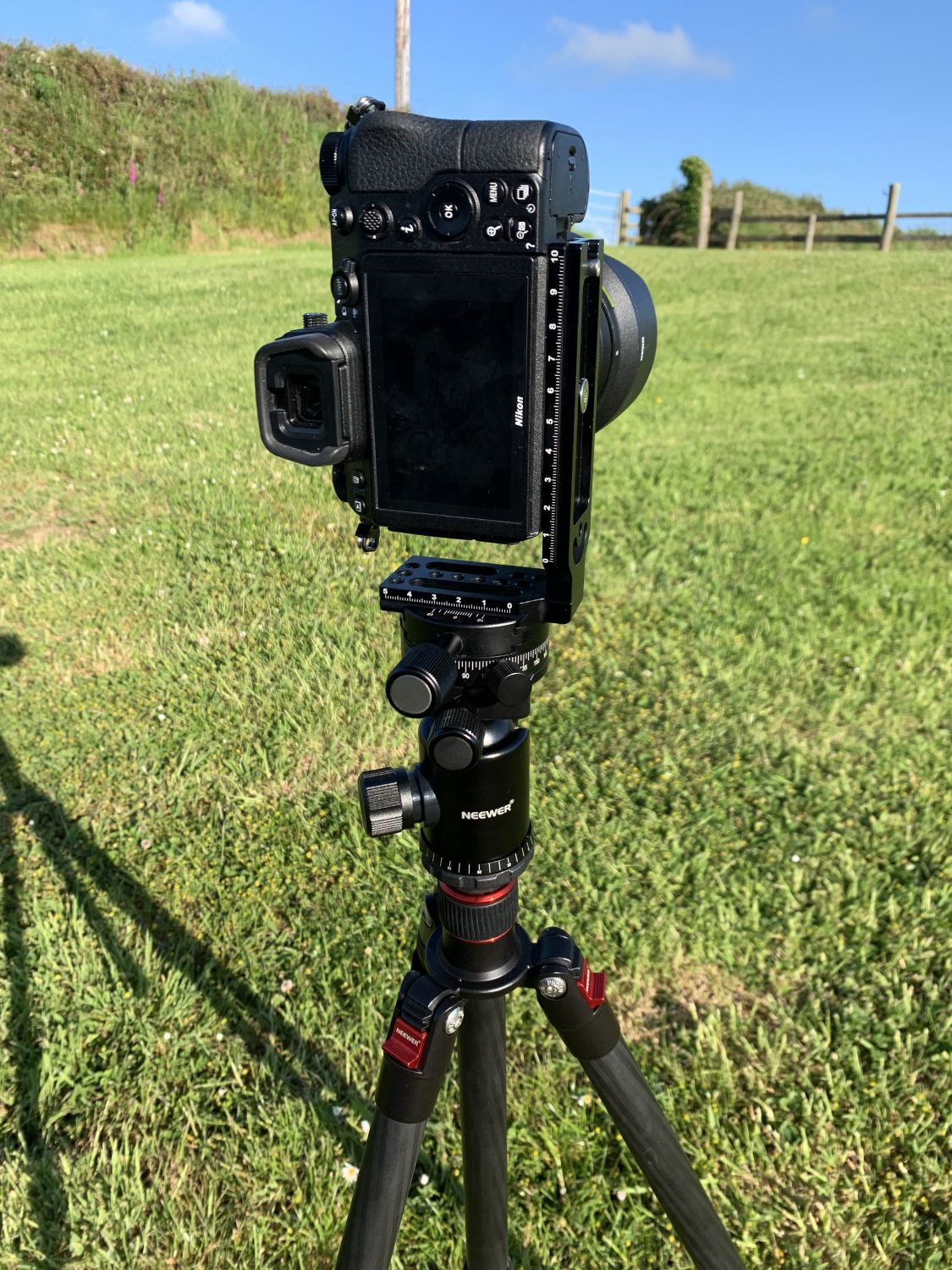
The Levelling head is used so that the camera can be rotated to take a number of shots that can then be stitched together in software. Although my ball head tripod mount does have a rotation capability, this is beneath the ball head and plate itself which means that if the ball head plate is levelled, but the tripod is not perfectly upright, then when it is rotated, it will become unlevel. With a levelling head, the rotating plate sits above the ball head and therefore can be rotated whilst staying flat.
The L bracket allows one to fix the camera to the top plate in portrait orientation. Itself a useful tool but when combined with the Levelling head allows one to take panoramic shots with the camera’s long axis on the vertical, meaning that, on a 3:2 frame, the pixel count on the vertical is 50% larger – great for large prints or substantial cropping later.
Fig 1 below shows my set up.
My Images
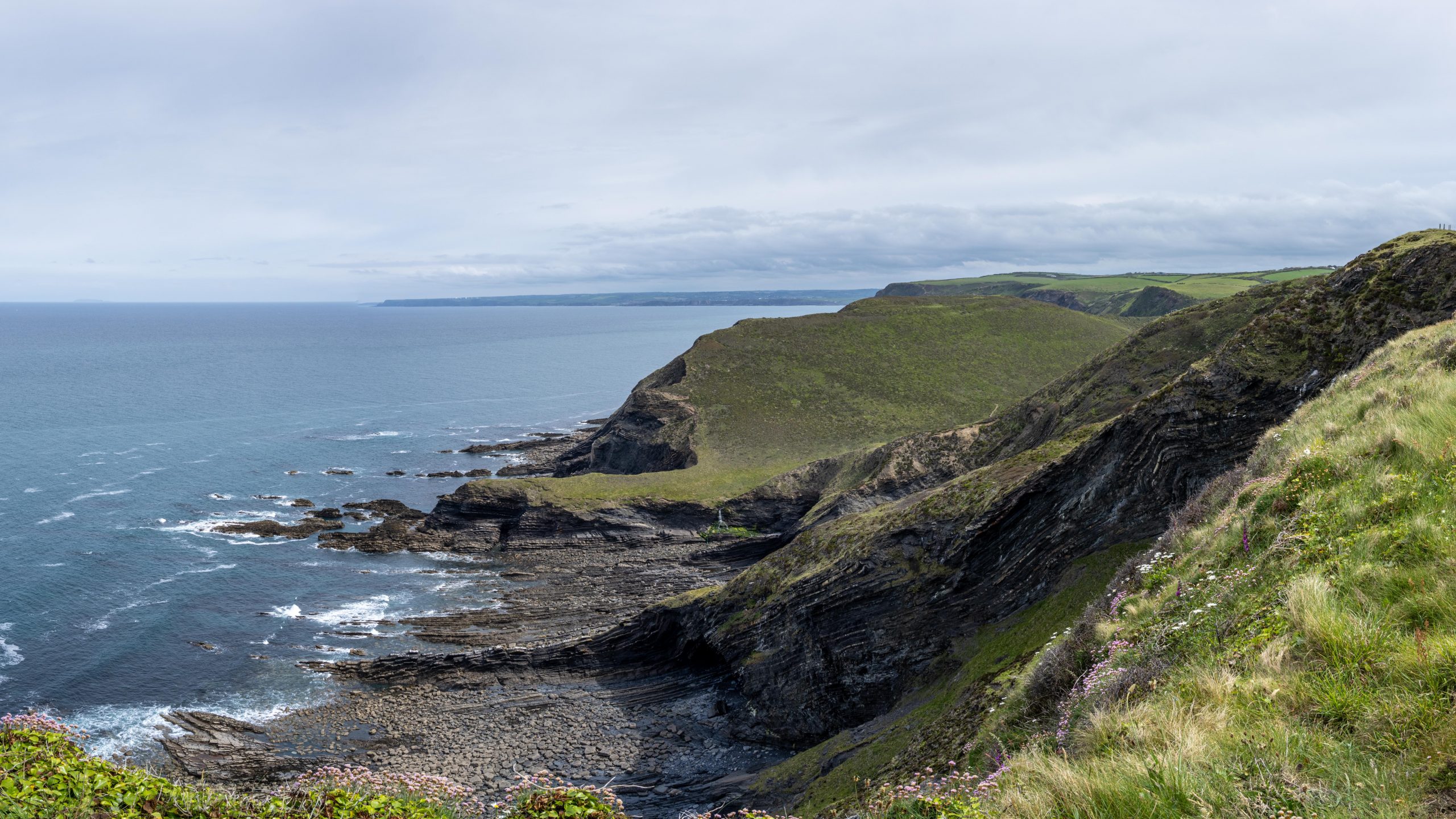
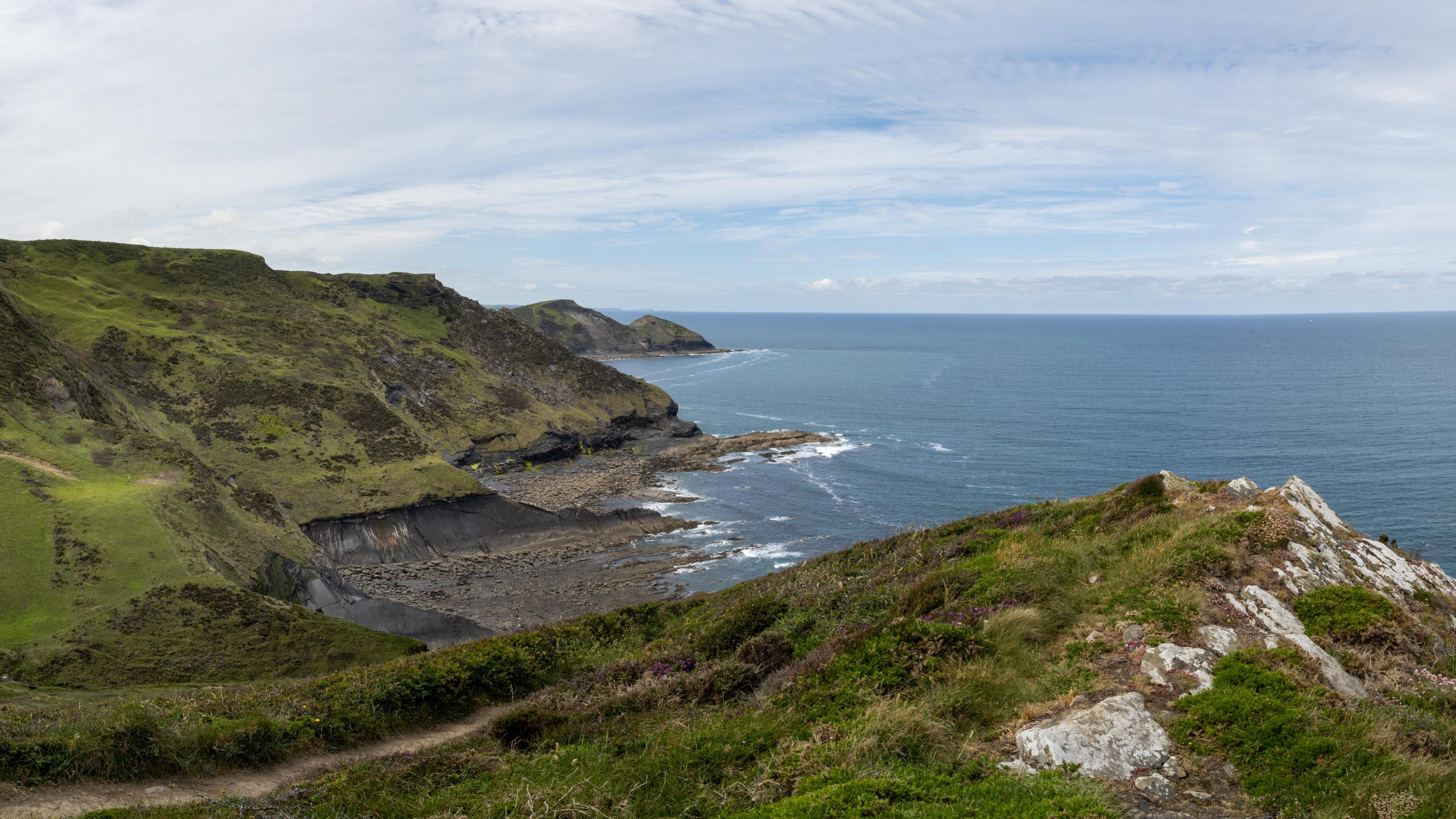
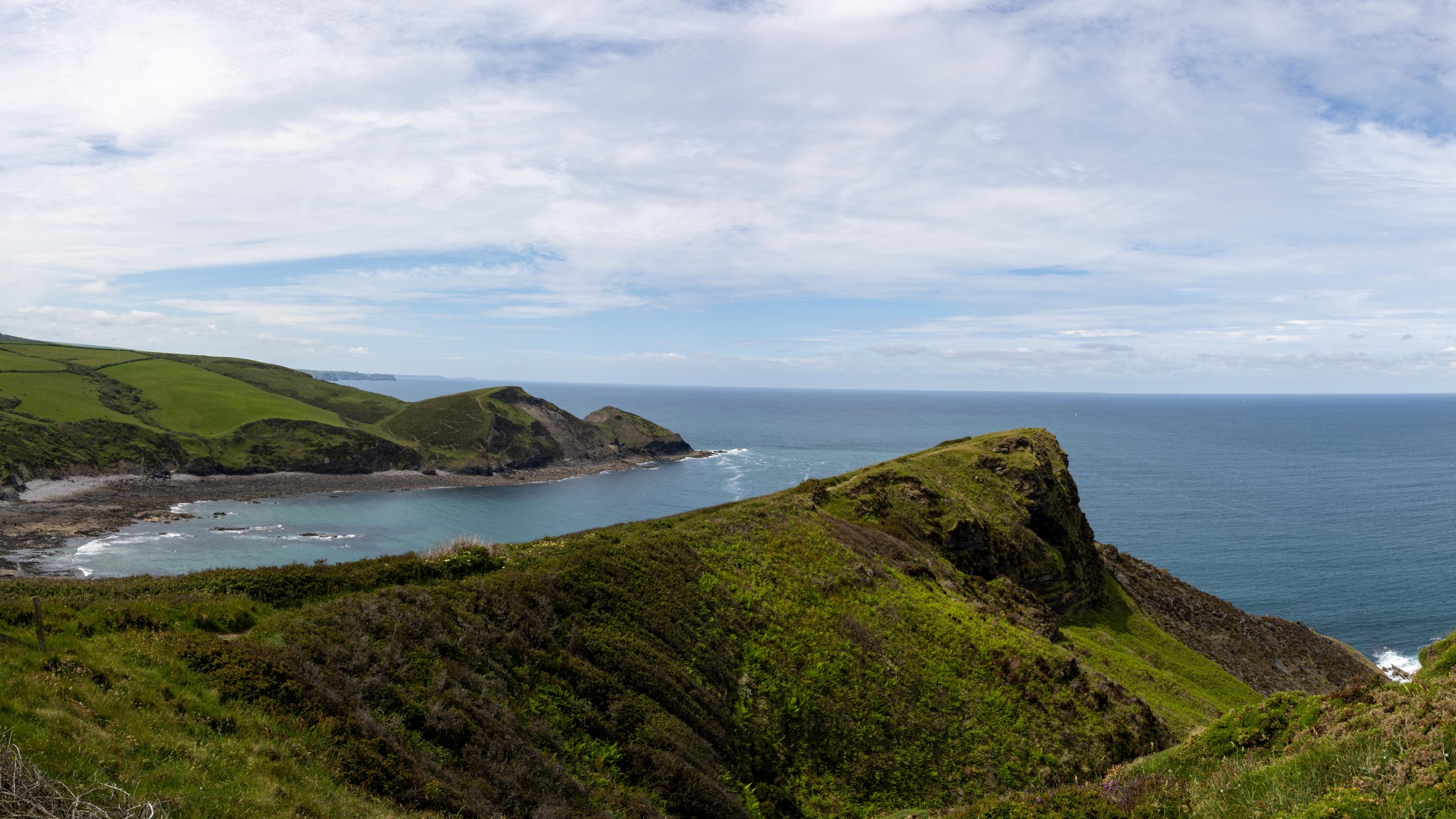
The images I captured along the coast path near Crackington are shown below. All of them are considerably wider than could have been achieved with my 24mm lens, the widest I had with me.
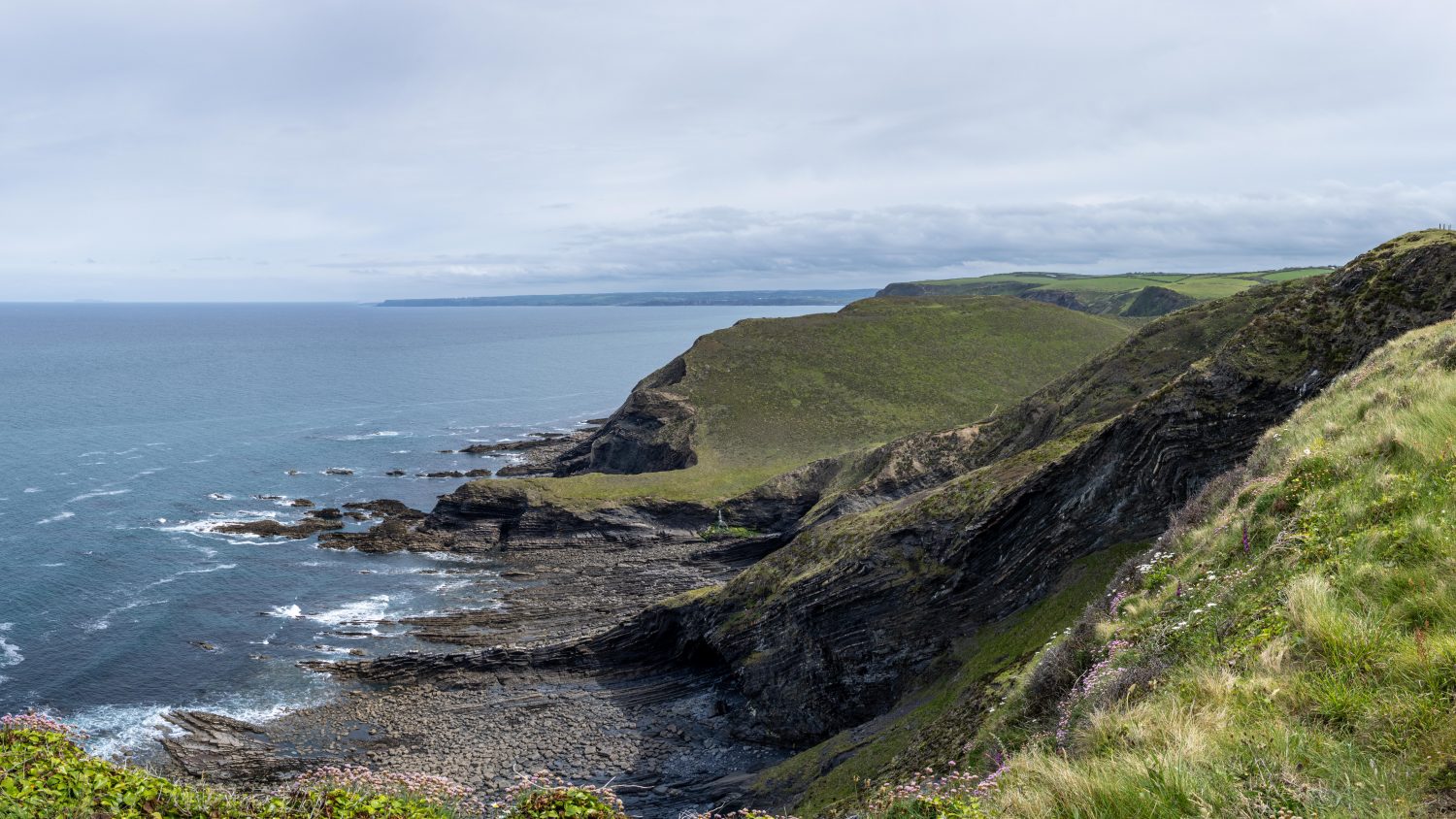
Fig 2 Crackington Haven #1 (2020) 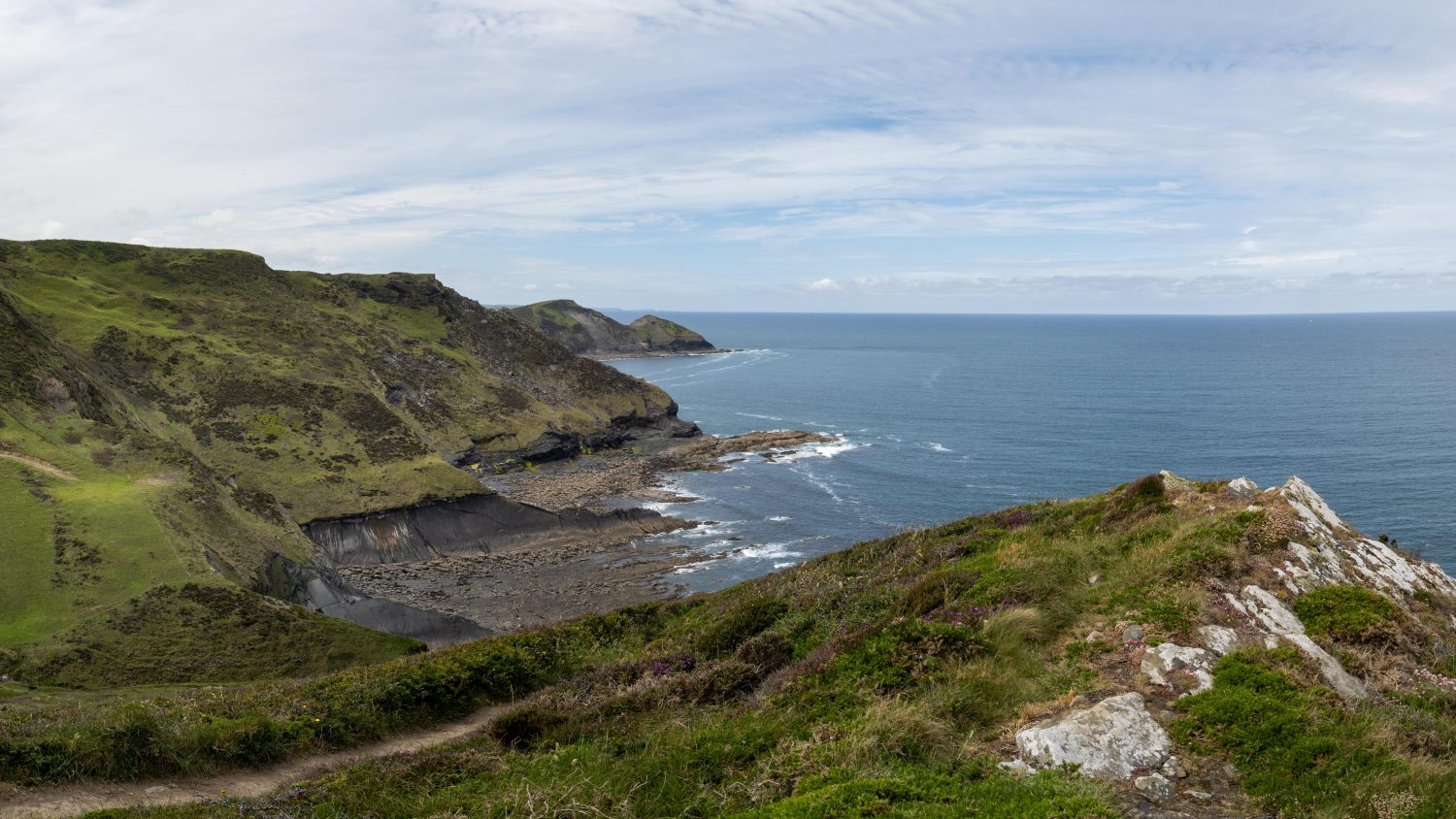
Fig 3 Crackington Haven #2 (2020) 
Fig 4 Crackington Haven #3 (2020)
Things I learned
- It is extremely important to get the camera level as imperfections will show up when images are stitched
- If the panorama is too broad, straight lines that run across the scene will show a curvature effect. All of my images have slightly bent horizon lines somewhere in the image.
- It is possible to create truly huge images. One of my images was 15938 wide by 7113 before cropping – that is 113 million pixels. From this image, it is possible to create a large number of smaller images, including still very large 16:9 images. Fig 2 shows one crop I made that ended up as 10685 wide by 6010 tall which is still 64 million pixels.
- The large pixel count makes for rather unwieldy files. To create these images for this web page, I had to reduce the quality of the images down to 50% in order to create something reasonable, they are still 5Mb each even at this setting
- It is important to set a manual exposure and choose a single focus point for the entire exercise so that all of the images merge without unnatural joins.
As an exercise to create very large images that can then be used to create multiple further images, I think it is a technique that works well. The technique also works well capturing images that have a broad width beyond the field of view of the lenses that one might have available. I think it is this later reason that is my most likely usage, provided one has an L bracket and levelling head, there is not that much extra effort required and the results can be excellent.