Lipper’s project Trip is a collection of 50, square, images intended to portray an imaginary trip across America. Each image is accompanied by text written by Barthelme which read in conjunction with the images does evoke a different inquiry into each image but is not directly written to tell a story of the images themselves.
Taken between 1993 and 1999 they are captured to evoque thoughts of other American photographers who have taken images in a similar style such as Walker Evans or Stephen Shore. “Lipper’s intentional use of black-and-white film and the road trip genre align her work with the giants of 20th century documentary photography, recalling images of America that have become part of this country’s historical memory.” (Susan Lipper “trip, 1993 – 1999”, 2018).
When I reviewed Stephen Shore, there was a clear distinction between his American Surfaces, taken with a 35mm camera and Uncommon Places taken with a large format camera. There were less people in the later given the setup time for the camera but also, the pictures delivered a regular pattern of framing decisions. American Surfaces was more random and Lipper’s project is much more of that ilk. The images were taken using film (ibid.) and so I am sure it was not simply point and shoot, but there is an informality and randomness that contribute to their mystique, creating an almost surreal effect when viewed as a set.
Fig. 1 shows a meal that Lipper presumably had and here, there is a very direct parallel with Shore albeit that his images were in colour.
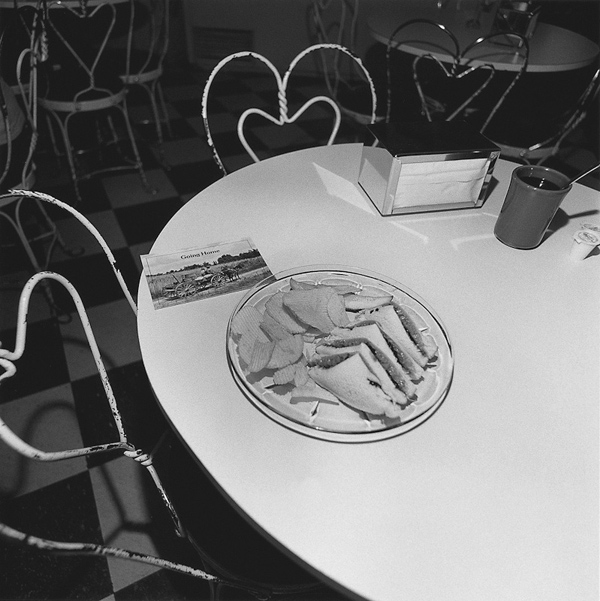
Fig. 2 shows a touch of humour, picking out a sign with missing letters and the small size of Slush Puppy being more expensive than the large. Both Fig. 1 and 2 are good examples of Lipper’s very informal framing that in today’s age would resemble something from Facebook or Instagram, especially with the square format which I am sure was not the format that the images were actually captured in.
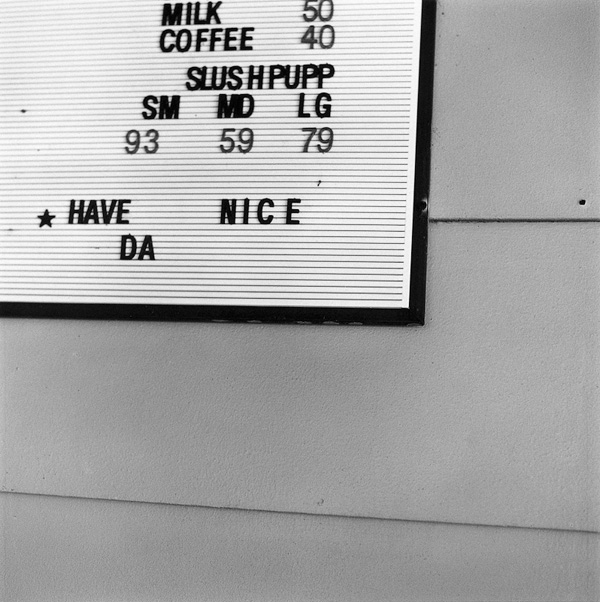
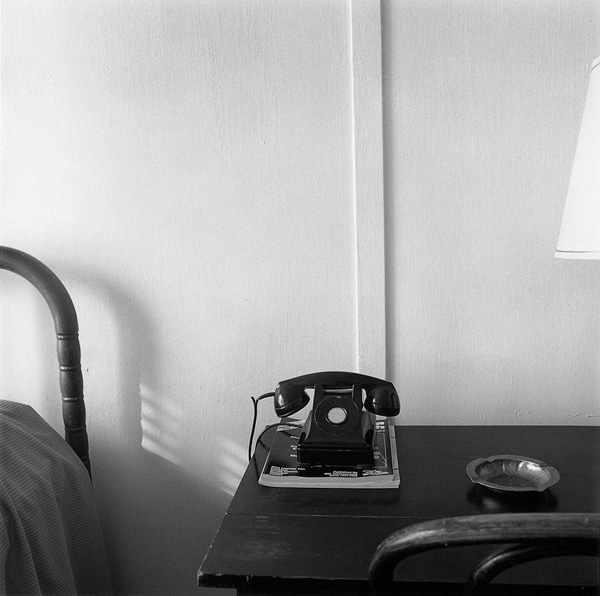
Fig. 3 is an example of the banal. Two things to note here. Firstly, on its own the image would probably be considered unremarkable, but as part of this set it is consistent and lends weight to the emotions that the full set generates. Secondly, the point of the image is the banality. This is part of the message that Lipper is trying to convey.
Learnings
- Informal framing works well for this set. It helps reinforce that these images are supposed to informally portray a trip in America. In my pursuit of ‘perfection’ I would often go to great lengths to try and get these subjects perfectly framed. This would detract from the set rather than add to it as Lipper’s approach does.
- Banal is ok if banal is what one is trying to portray. On a wider note, this is consistent with other research I have done. The images and the sets have embodied the emotion that the project is aiming to convey. If this is dull / empty / banal that’s ok as long as that is part of the intent; trying to make the image or set more appealing only distracts from the intent and, probably, turns it into something far less powerful purely for aesthetic reasons.
- Using other photographer’s approaches as a starting point but then adding your own voice lends weight to the approach. I found myself reviewing Lipper’s images in comparison to Shore’s. This did not weaken Lipper’s set, it added strength to it and caused me to consider the images in more detail than I might otherwise have done.
Bibliography
Nyartbeat.com. 2018. Susan Lipper “trip, 1993 – 1999”. [online] Available at: <http://www.nyartbeat.com/event/2018/26B6> [Accessed 21 April 2021].
Figures
Figure 1. Lipper, S., n.d. Trip #46. [image] Available at: <https://www.susanlipper.com/trip_46.html> [Accessed 21 April 2021].
Figure 2. Lipper, S., n.d. Trip #19. [image] Available at: <https://www.susanlipper.com/trip_19.html> [Accessed 21 April 2021].
Figure 3. Lipper, S., n.d. Trip #50. [image] Available at: <https://www.susanlipper.com/trip_50.html> [Accessed 21 April 2021].