Artist’s Statement
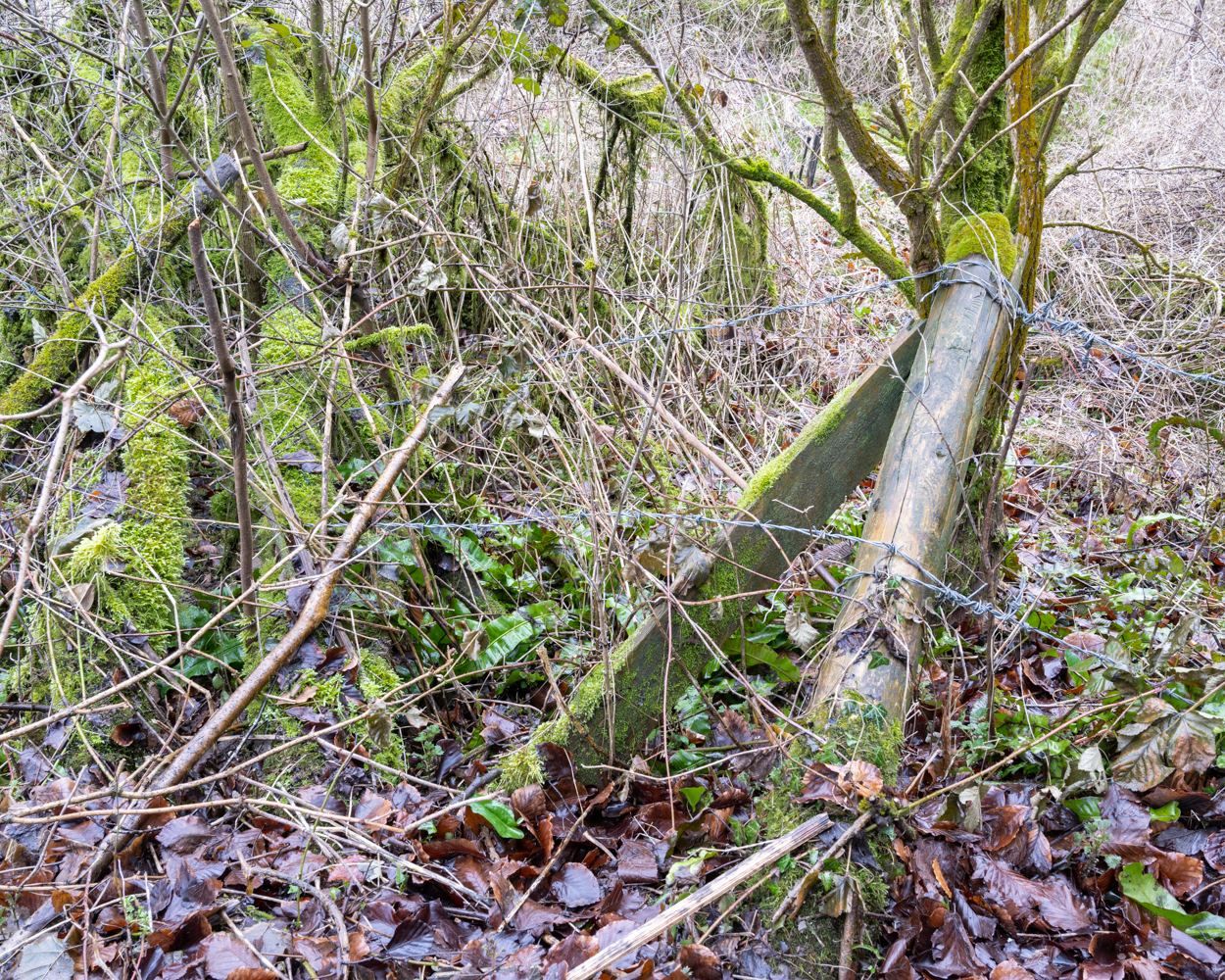
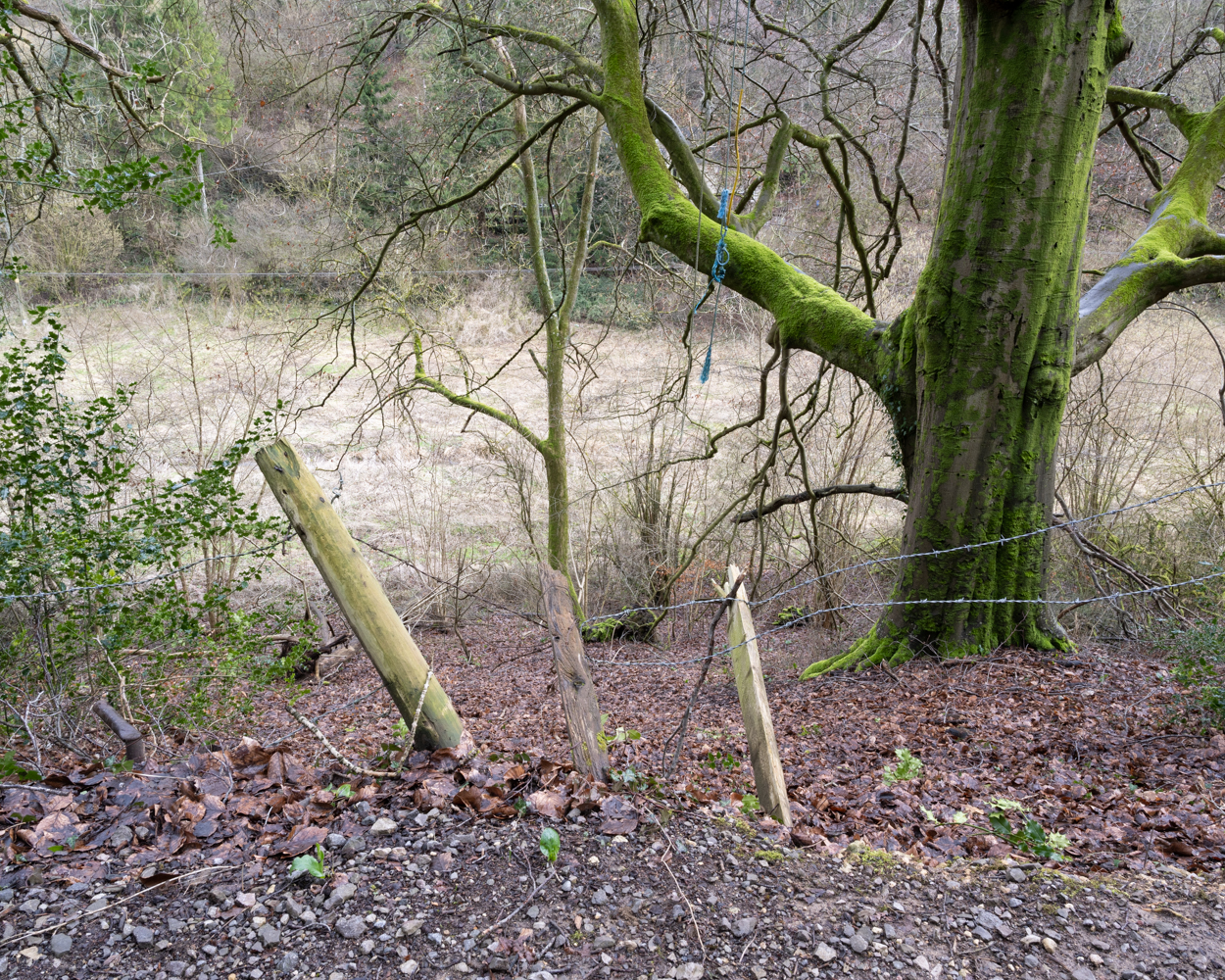
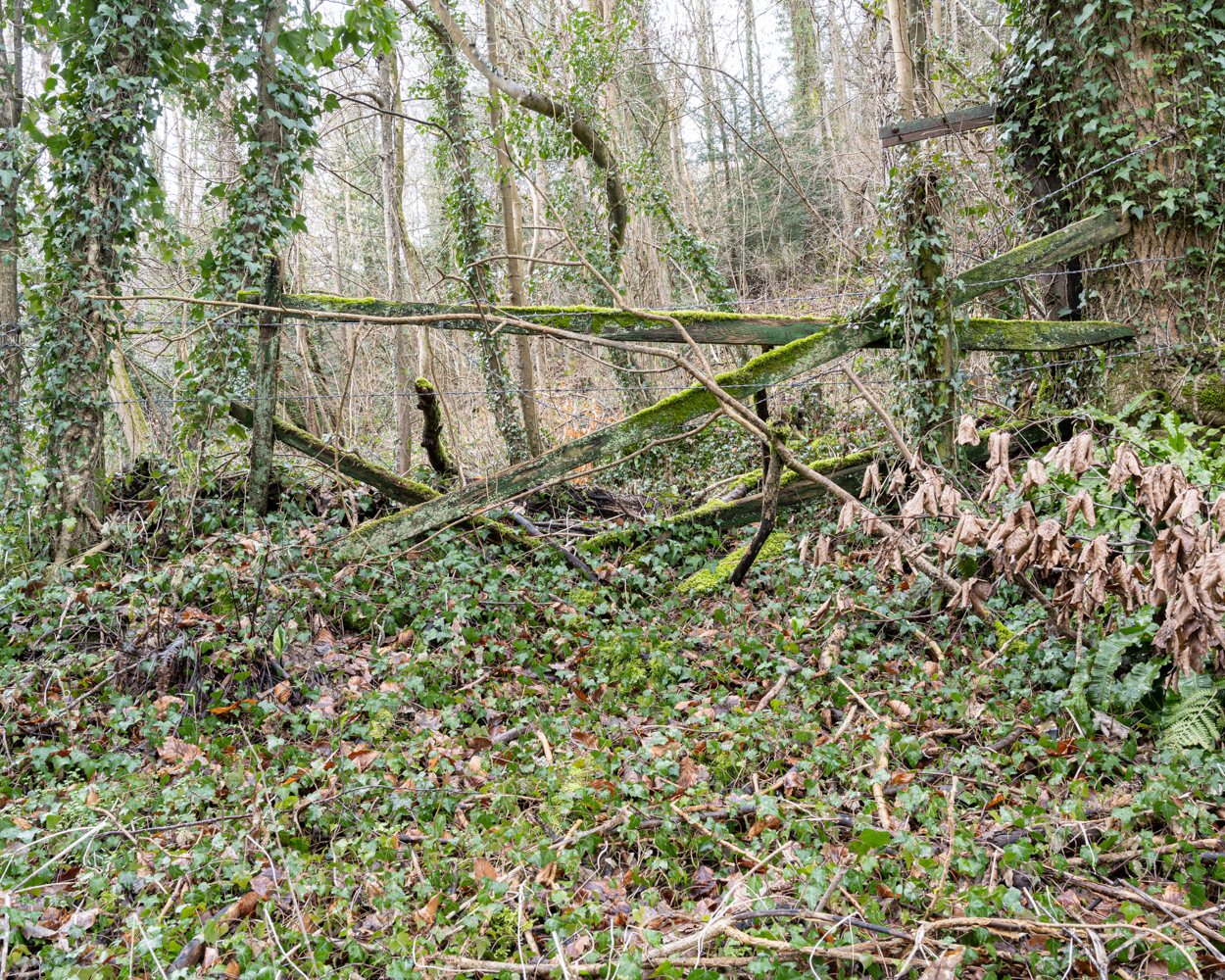
Outside Stroud’s town centre lie the edgelands, its five valleys dotted with weaving mills, canals and other relics of industry-past slowly decaying, curiously becoming more picturesque as time marches on. These valleys, the landscape, continue their journey, nature reclaiming what it never really gave up. Go further and you will find the true countryside, this is where Toadsmoor Valley can be found, lying within an Area of Outstanding Natural Beauty and a Conservation Area, and being a Site of Special Scientific Interest, this is a land on its own journey. Criss-crossed with wires and fences from the past that were used to mark out mankind’s attempts to own and control the land, nature continues its inexorable march and lays bare that illusion. We like to think we own these lands, but we do not. Landscapes do not stop their journey for us whatever we might like to think.
Presentation
I would display these images as a set, as the collection is designed as a typology and their impact comes from the set as a whole. Ideally the images would be shown on a wall laid out as shown below. Individual images can be clicked to view full size.
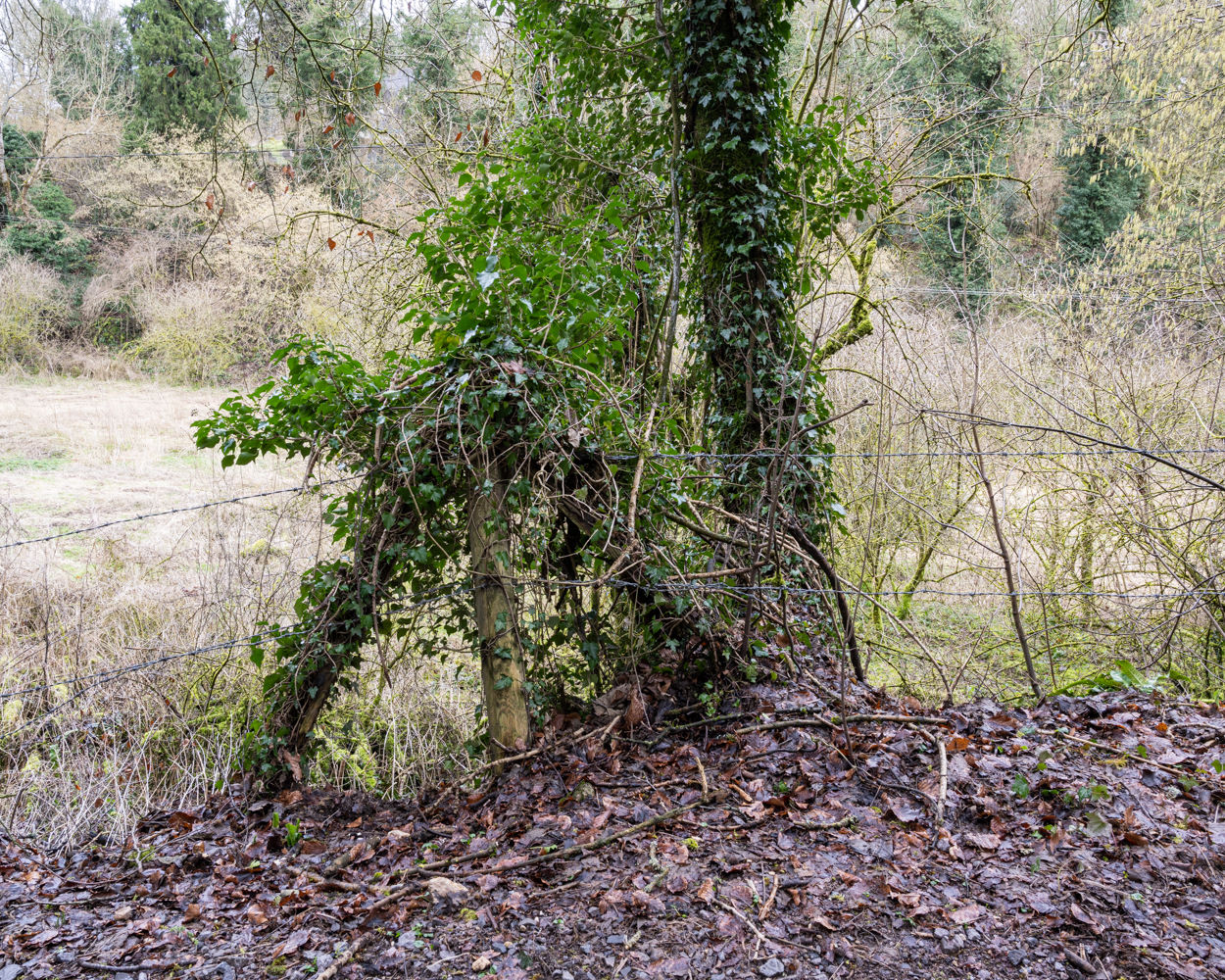
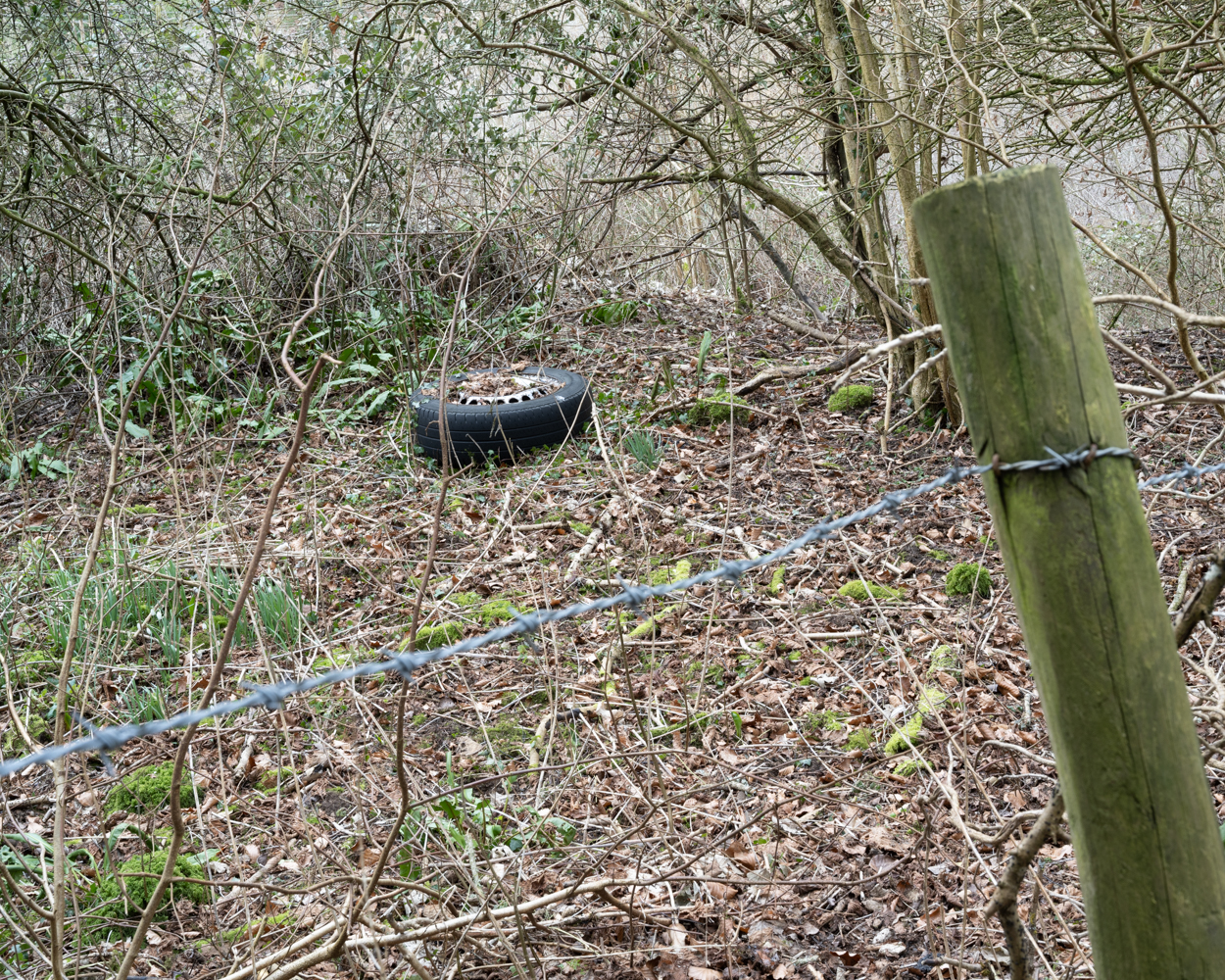
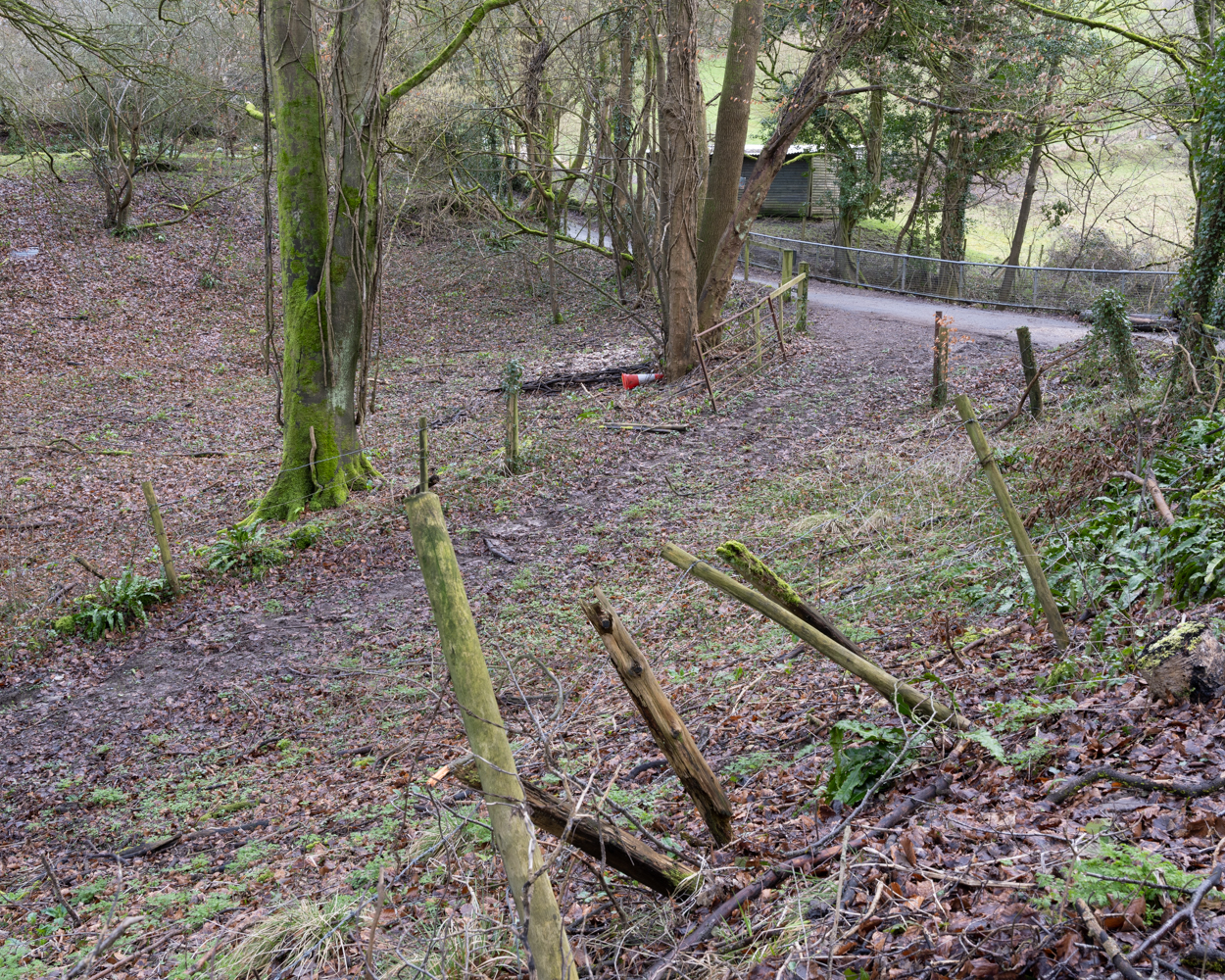
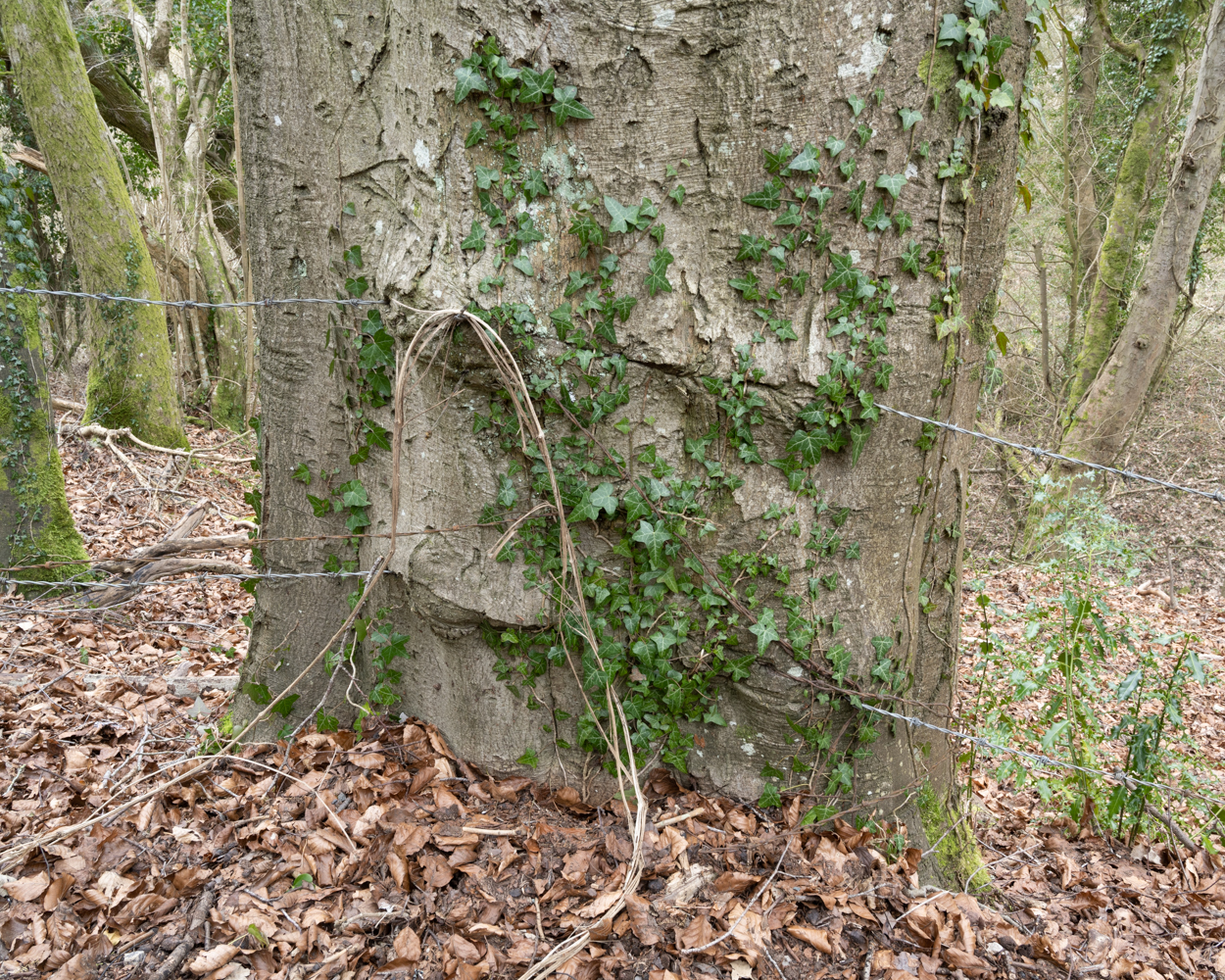
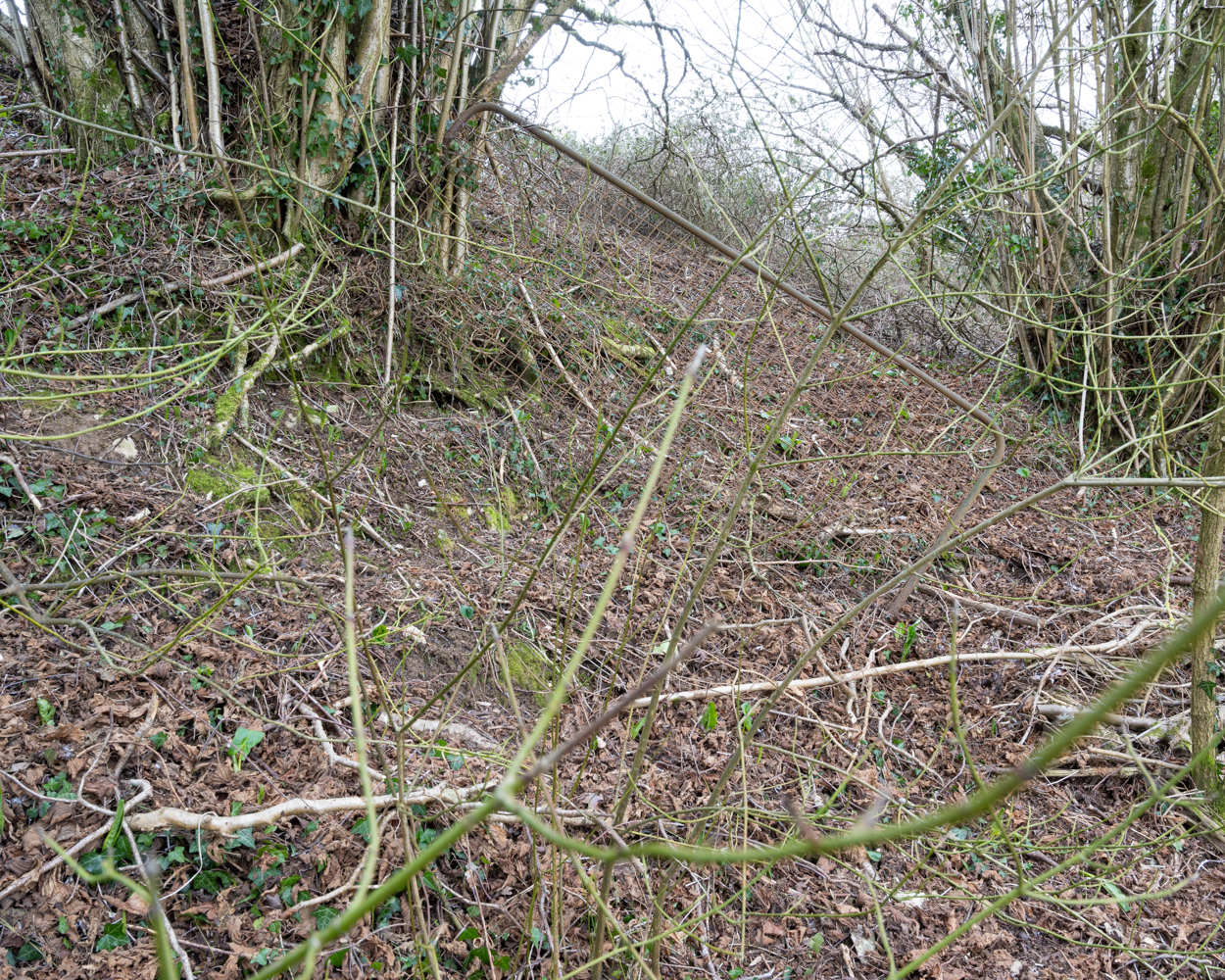
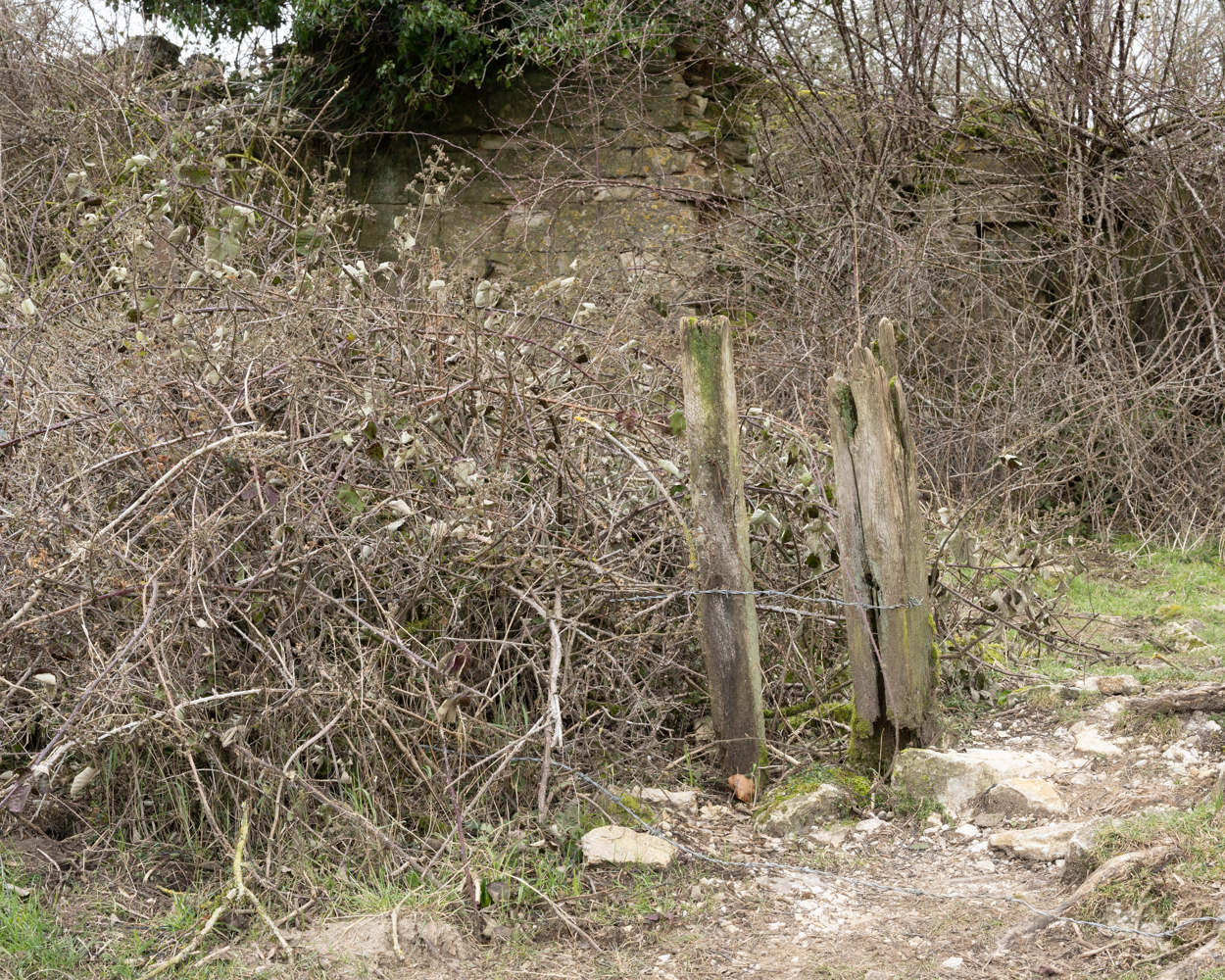
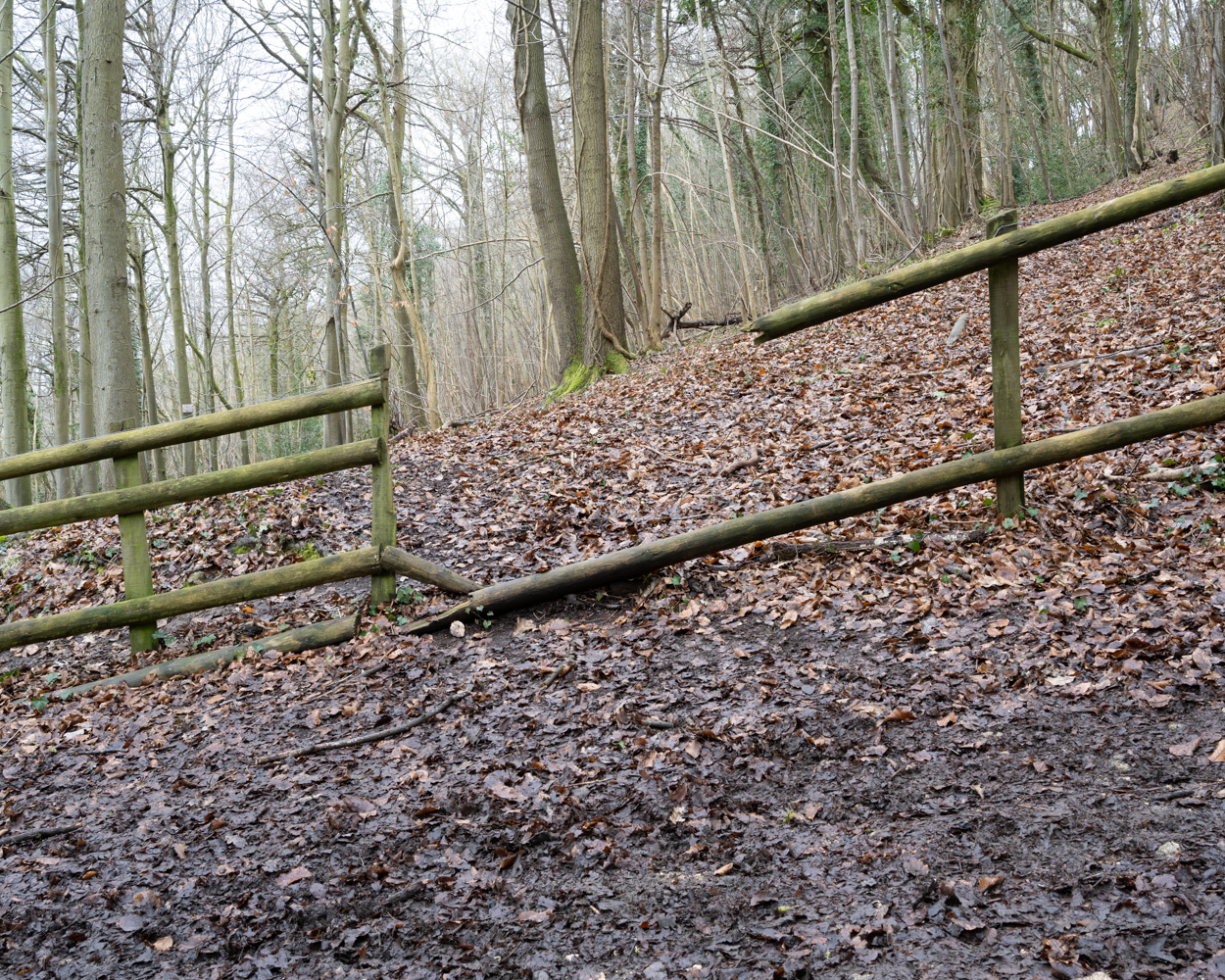
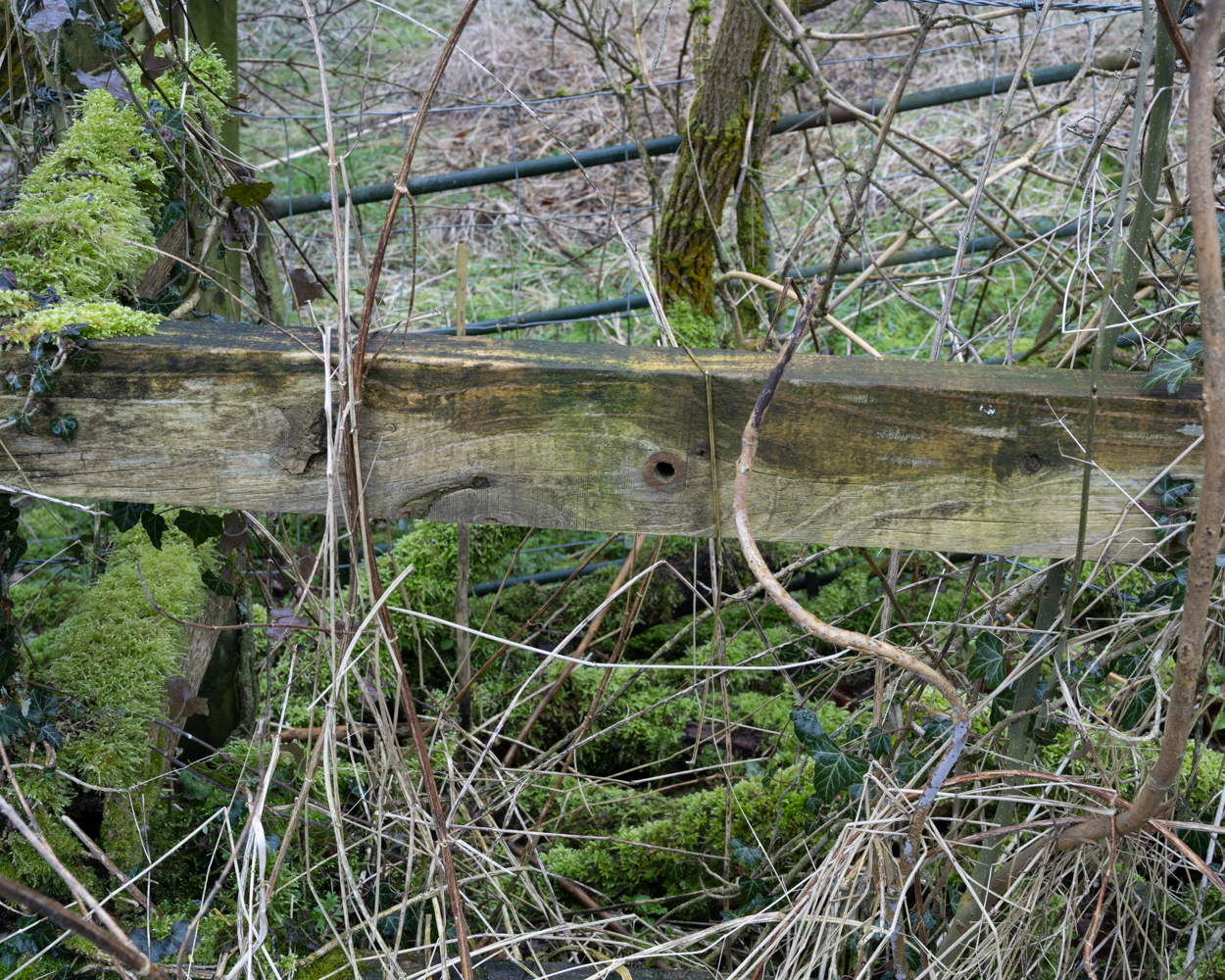

Notes on Assignment
I think my artist’s statement speaks for itself on what I want to convey with this assignment and the points below are expanded upon in my reflections post.
I originally interpreted this brief as my journey. I had already thought to capture the interplay of man and nature in my valley and so I captured a range of shots on a walk through the valley. Over time though, through research on typology I realised that this was creating too varied a range of images and the collection was not likely to say what I wanted. I decided to switch to a full typology and re-interpreted the brief to be about the journey that the land itself is on, I am just an observer of that journey.
Sources of inspiration on how to approach the typology came from Stephen Shore, with Uncommon Places (Shore, 1973) and how he captures the landscape but even more so from Lewis Baltz where I saw how he rigidly sticks to his typology brief for each of his sets and how the power of the set far outweighs each individual image, a good example of this is his collection Nevada, 1977 (Beshty, Stahel and Campany, 2017:97).
The contact sheets show a range of images that include fences, gates, and glimpses of buildings through trees. As a set, these represented my journey through the valley, but not the typology I was looking for and not the journey of the land. I had thought to use gates to signal a change from one scene to the next much like Mendes uses the road itself to signifiy a change in the film Road to Perdition (Road to Perdition (2002) – IMDb, n.d.). This variety was edited out as I focussed in on the typology of the fences.
Contact Sheets


Bibliography
Shore, S., 1973. Stephen Shore – Uncommon Places. [online] Stephenshore.net. Available at: <http://stephenshore.net/photographs/uncommon/index.php?page=1&menu=photographs> [Accessed 30 January 2021].
Beshty, W., Stahel, U. and Campany, D., 2017. Lewis Baltz. Madrid: Fundación MAPFRE.
IMDb. n.d. Road to Perdition (2002) – IMDb. [online] Available at: <https://www.imdb.com/title/tt0257044/?ref_=nv_sr_srsg_0> [Accessed 9 February 2021].