Technical and Visual
I found the biggest challenge with this assignment from a technical perspective was the need to produce 12 images that were all framed exactly the same. When I first set out, with the first image, the difficulty of this had not dawned on me. It was only when I came to take the second image, with a copy of the first in hand that I realised the challenge. This meant that I needed to restart the assignment. On my second attempt I took careful note of tripod extensions, leg extensions and the exact positioning of the feet. I also selected specific landmarks in the frame and was careful to observe where in the viewfinder they showed. I used several landmarks which was fortunate as during the assignment I came to realise that some of them were not visible in the summer months when trees have full leafs. Overall, if the images are viewed on my blog in light box mode so that they can be flicked through, it can be seen that they are all close to being the exact same framing, although despite all of my efforts, they are all still slightly different. I have at least learnt the challenge that an assignment such as this brings and that will serve me for the future.
Visually I think that the images successfully show the progression of seasons in the valley although I think I could show this progression in different ways with what I have learnt in my studies and this is described below in the creativity reflection.
Quality of Outcome
Each of the images themselves are technically sound. The specific view in the frame is challenging as the sun would move directly across the frame during the day. This meant that I needed to chose a time of day where the sun was out of shot and then for consistency purposes, use the same time every month. This again was difficult at the varying time of sunrise meant that instead of choosing the same time, eg 0700, I needed to vary the actual time to be relative to sunrise. The images are all shot 3 hours after sunrise which through experimentation gave the best balance of sun out of shot, least shadows in depth of valley, and a well lit scene generally.
As a set of images I am happy with them from a quality perspective. It is the the creativity that I am less content with.
Demonstration of Creativity
This area of the assignment is the area that I find myself frustrated with but on reflection, I feel that this is due to the learning I have gained from undertaking this course and the growth that has caused in my photographic practice, particularly in landscape photography.
Before studying with the OCA at all, I used to produce a lot of landscape images. It was my thing. As I have learnt with my studies on context and narrative, identity and place, I have found myself losing my way slightly because the things that I learnt in those courses interested me greatly and I was struggling to see how landscape could play its part in my photography. When I set the construct for this assignment, I think that is the place I was in. I chose a very classic view looking down my valley and I thought that the time dimension would give me that extra facet I was looking for. At that point, given the time limits for study, the assignment is locked in, you cannot change it and start the year long task again.
As this assignment has progressed alongside my studies, I have learnt how to incorporate narrative, context, and identity into my landscape photographic practice (or vice versa) and as I have learnt that, I found myself less and less interested in this assignment. For me, there was no longer any creativity in it.
If I were to re-do this assignment, I would begin by thinking what story I wanted to tell. My story would be related to how things come and go throughout the year and how it is the emergence and disappearance of these things that mark out the seasons and the progression of the year. Some of these things are visible in my images, for example daffodils can be seen in March, there would be wild garlic in April and so on. I would put my thoughts into how to show these emergences in different, more abstract, images rather than trying to show exactly the same frame for every shot. This could even extend to people, for example February could show the local farmer and his early lambing season.
Whilst I am left feeling disappointed with the assignment, I am pleased with this reflection and the understanding that I have gained from the assignment. The images do also serve as a useful record of just what the scenery does look like month to month in the valley; this is an important consideration when capturing images as one can use the seasons and their associated landscapes to emphasise or de-emphasise other aspects of what one is trying to capture, something I learnt when studying Melanie Friend and her series The Plain (Friend, 2021).
Context
The biggest input to my assignment was that of the painterly tradition. This is what I have now learnt has been the biggest input to my landscape photography ahead of these studies. In exercise 1.3 I researched this history looking at images such as The Hay Wain from Constable and came to realise that I wasn’t just influenced by photography magazines, but also by centuries of landscape paintings. This was the precept for my assignment and it would be wrong to say that any current photographer influenced my choice.
If I were to retake this assignment then I would re-study the work of Melanie Friend (ibid.) and Justin Partyka (Partyka, n.d.) in particular.
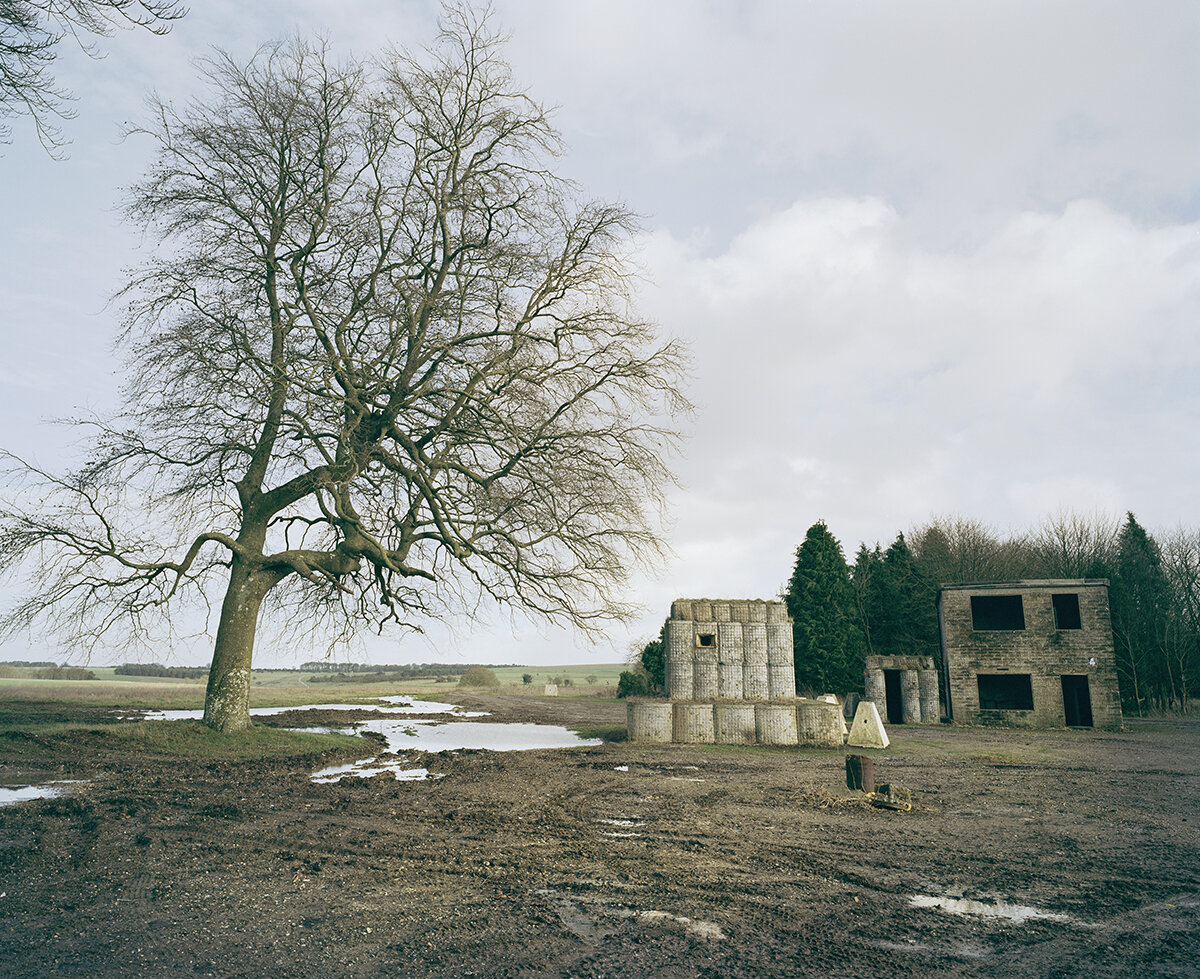
Friend for the way in which has used different seasons to contrast aspects of the landscape with details she has picked out. For example in Fig. 1 below she chose a bleak winter scene to emphasise the bleak nature of the barn in the shot. Other images were taken in different seasons to highlight other aspects.
Partyka for the way that he captures the ‘identity’ of the landscape in a way that extends significantly beyond the classical framing of images that were my previous point of reference. Figure 2 below is an example in which the landscape itself is a very limited part of the image but the character of the land and what goes on there is everything.

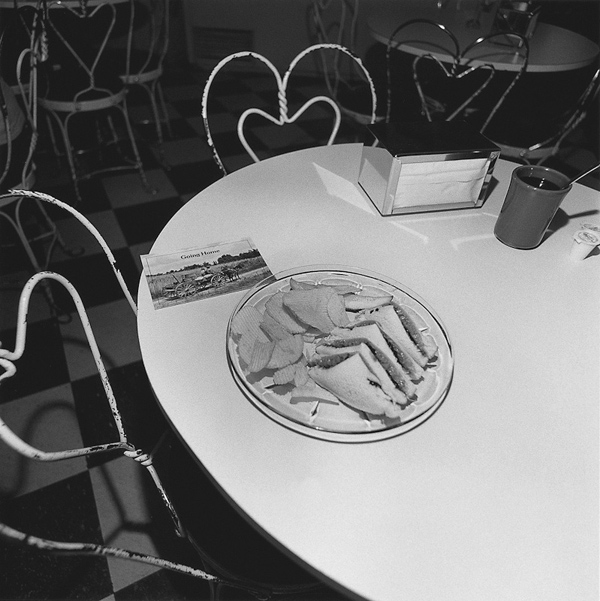
Finally, in terms of picking out specific details, then Stephen Shore’s American Surfaces or Susan Lipper’s Trip could be sources of information, see Fig. 3.
Bibliography
Friend, M., 2021. The Plain — Melanie Friend. [online] Melanie Friend. Available at: <https://melaniefriend.com/the-plain/> [Accessed 23 July 2021].
Partyka, J., n.d. Home. [online] Justinpartyka.com. Available at: <http://justinpartyka.com> [Accessed 18 October 2020]
Figures
Figure 1. Friend, M., 2016. Beach’s Barn, a FIBUA (Fighting in Built-Up Areas) location used for military training. February 2016. [image] Available at: <https://melaniefriend.com/the-plain/> [Accessed 23 July 2021]
Figure 2. Partykas, J., 1975. Black Fen. [image] Available at: <http://justinpartyka.com/photographs/black-fen/> [Accessed 18 October 2020]
Figure 3. Lipper, S., n.d. Trip #46. [image] Available at: <https://www.susanlipper.com/trip_46.html> [Accessed 21 April 2021]